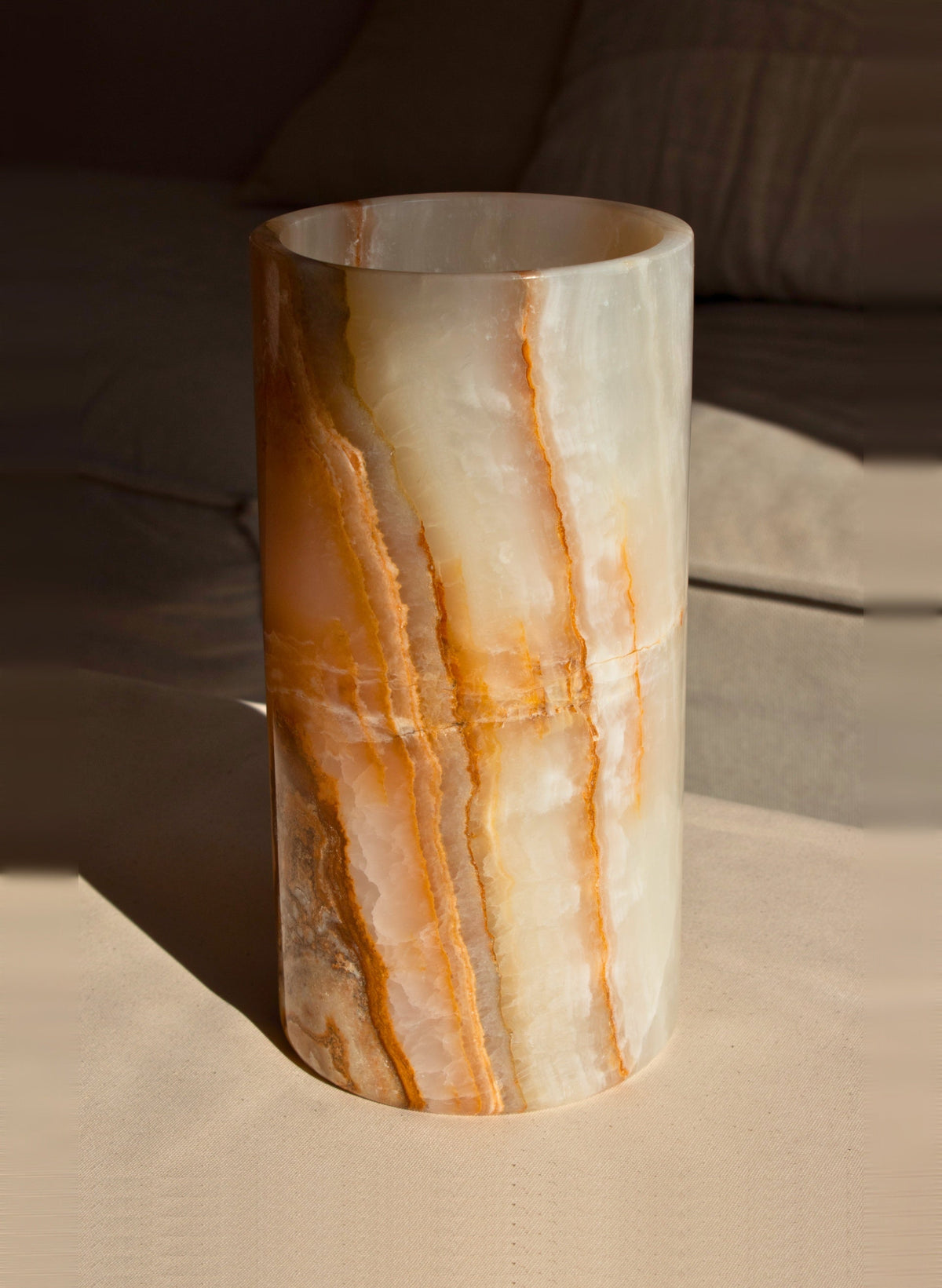
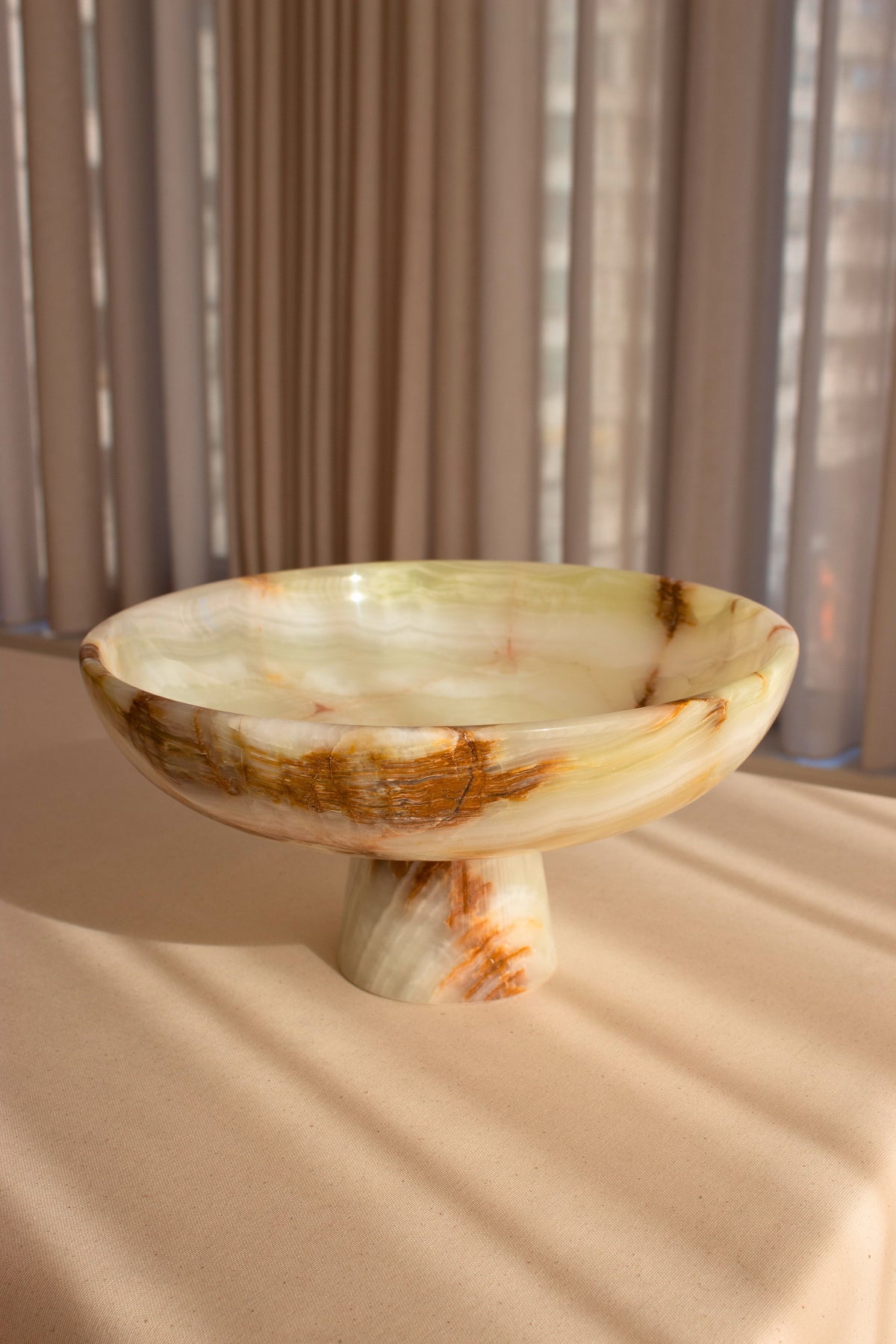
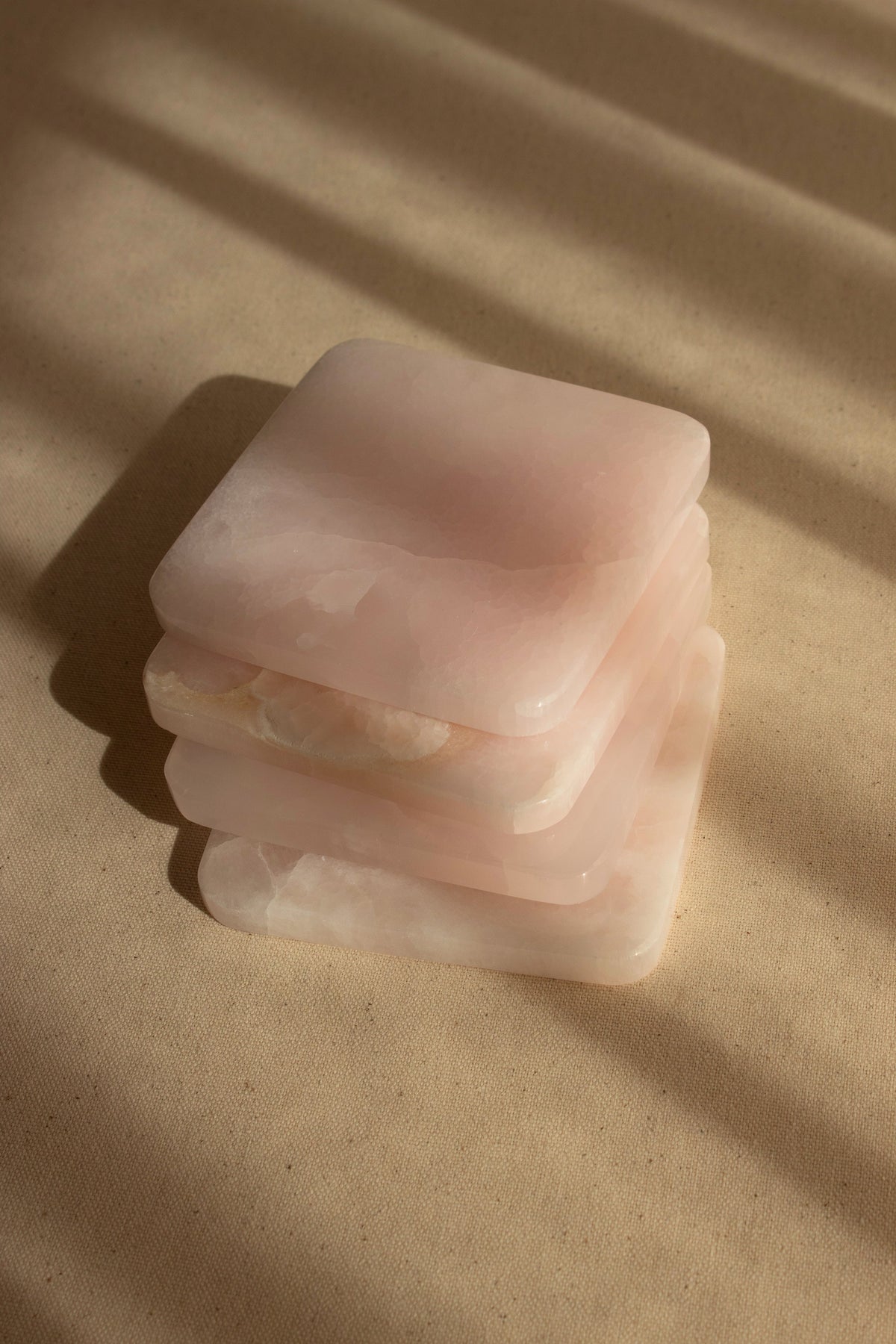
You may have noticed onyx countertops, lamps, or decorative panels that seem to emit a soft, ethereal glow, surrounded by a delicate halo, as if the stone itself is radiating light. This mesmerizing effect comes from the natural translucency of onyx.
How can a “solid” stone let light pass through?
Onyx is composed of layered calcite crystals, often arranged in striking bands and patterns. The spaces between these layers, combined with the stone’s structure, allow light to penetrate, refract, and scatter, creating a warm, glowing effect that feels almost magical.
Lighter-colored and more uniform onyx, such as light green, white, or cream varieties, transmit light most effectively. Darker or heavily veined onyx may allow less light to pass through, but can still produce dramatic visual effects when backlit.
How much light gets through comes down to three things.
-
 ThicknessThe thinner the piece, the more translucent.
-
 PurityPale stones with fewer impurities allow light to spread evenly.
-
 LightBacklighting and warm light sources highlight the stone’s natural depth and vibrancy.
The charm of onyx lies in its combination of natural beauty and translucence: it may feel cool and solid in daylight, but when light shines through it, it transforms into a warm, radiant surface full of life.

Carista Layered Vase · Light Green Onyx
So next time you see a piece of onyx glowing, take a closer look. You’ll realize it’s not just light at work, but millions of years of nature’s artistry shining through.
In a world of mass production, we return to rarity.