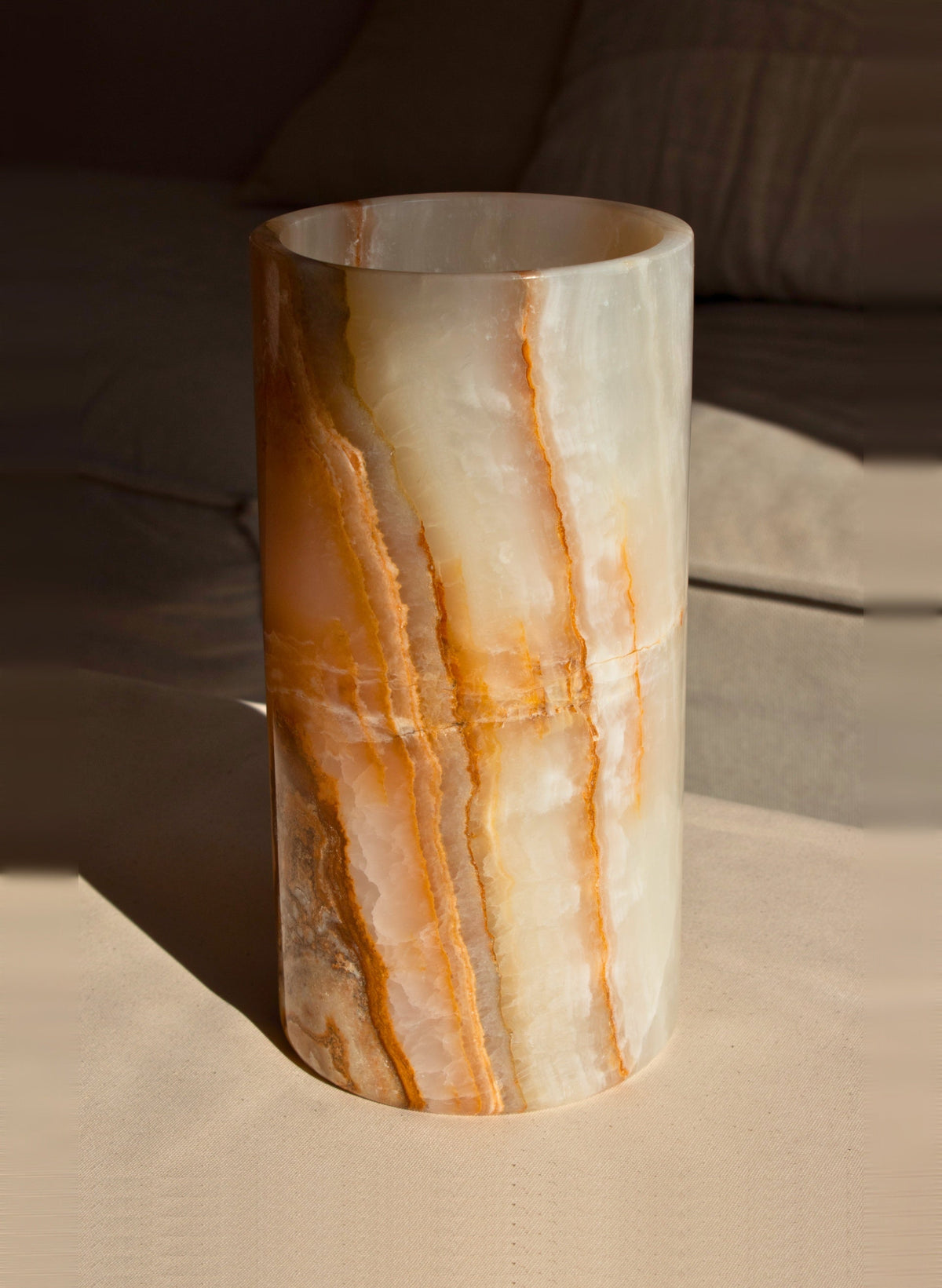
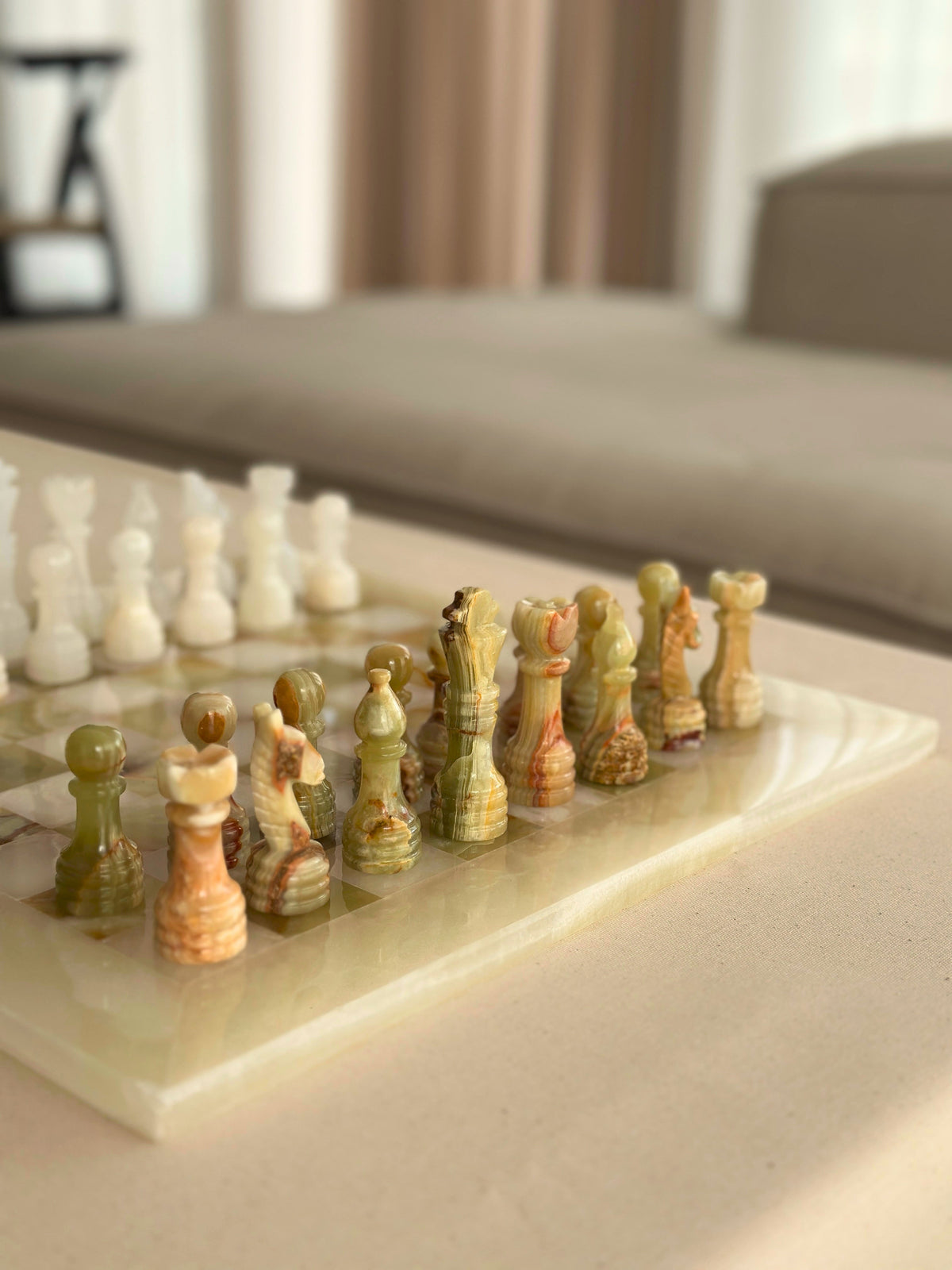
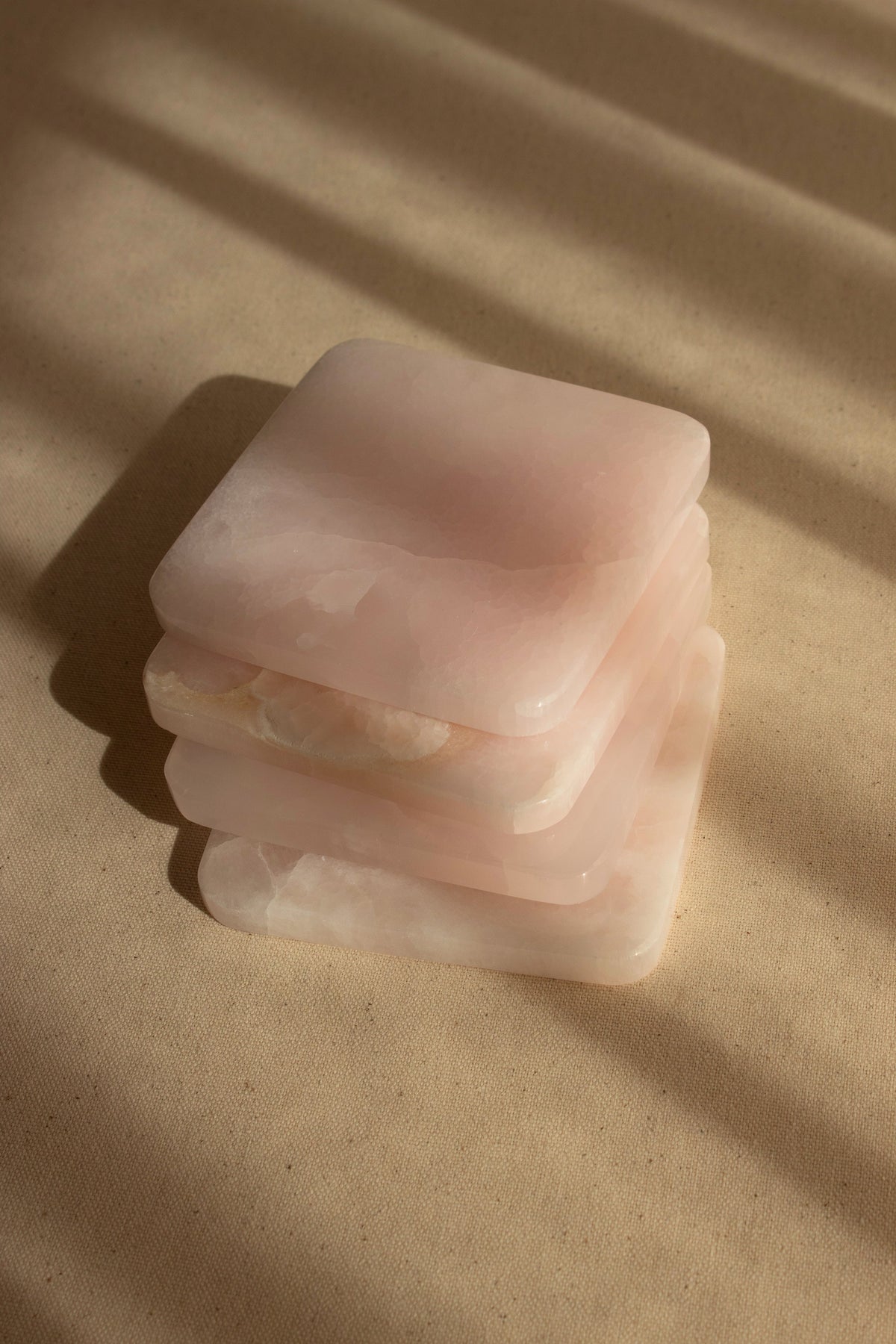
You may have run your hand across an onyx vase or bowl and noticed something strange: no two pieces are ever alike. The veining flows in one direction here, curls into a spiral there, shifts from honey-gold to deep green within a single centimeter. It almost looks painted. It isn't. What you're touching is a chronological record of millions of years, frozen mid-motion.
How onyx forms
Onyx doesn't form the way most stone does. Unlike deep-earth metamorphic rock, it grows at or near the surface, drop by drop, through a slow chemical process called precipitation.
It starts with rain. As rainwater filters through soil and organic matter, it absorbs carbon dioxide and becomes a weak natural acid. This acidic water seeps through underground limestone, dissolving it and loading itself with calcium and carbonate minerals. Eventually, this mineral-rich water finds its way into an underground cave, or up through a thermal spring.
The moment it reaches open air, the pressure drops. Just like carbon dioxide escaping a freshly opened bottle of soda, the gas trapped in the water rushes out. Without it, the water can no longer hold its dissolved minerals, and calcium carbonate crystallizes almost instantly, settling as a paper-thin layer of calcite. Repeat that process countless times, over millions of years, and those microscopic layers build into solid stone.
Reading the layers
Every layer is a record of the conditions that created it, much like the rings of a tree. Thick bands mean long, stable periods when mineral-rich water kept flowing, sometimes for centuries. Thin, faint lines mark dry spells, when the water slowed or stopped before a new layer began. And every shift in color tells you what the water was carrying at that exact moment.
-
 Browns & creamsClay and organic matter, washed in by heavy rain.
-
 Honey & amberIron oxide, picked up from iron-rich rock.
-
 GreensTraces of copper or chlorite in the source water.
A rainy season followed by a dry spell, followed by a shift in the underground water's path: each change leaves its signature behind. Layer by layer, the stone builds its own pattern, entirely by accident, entirely unrepeatable.
From cave floor to centerpiece
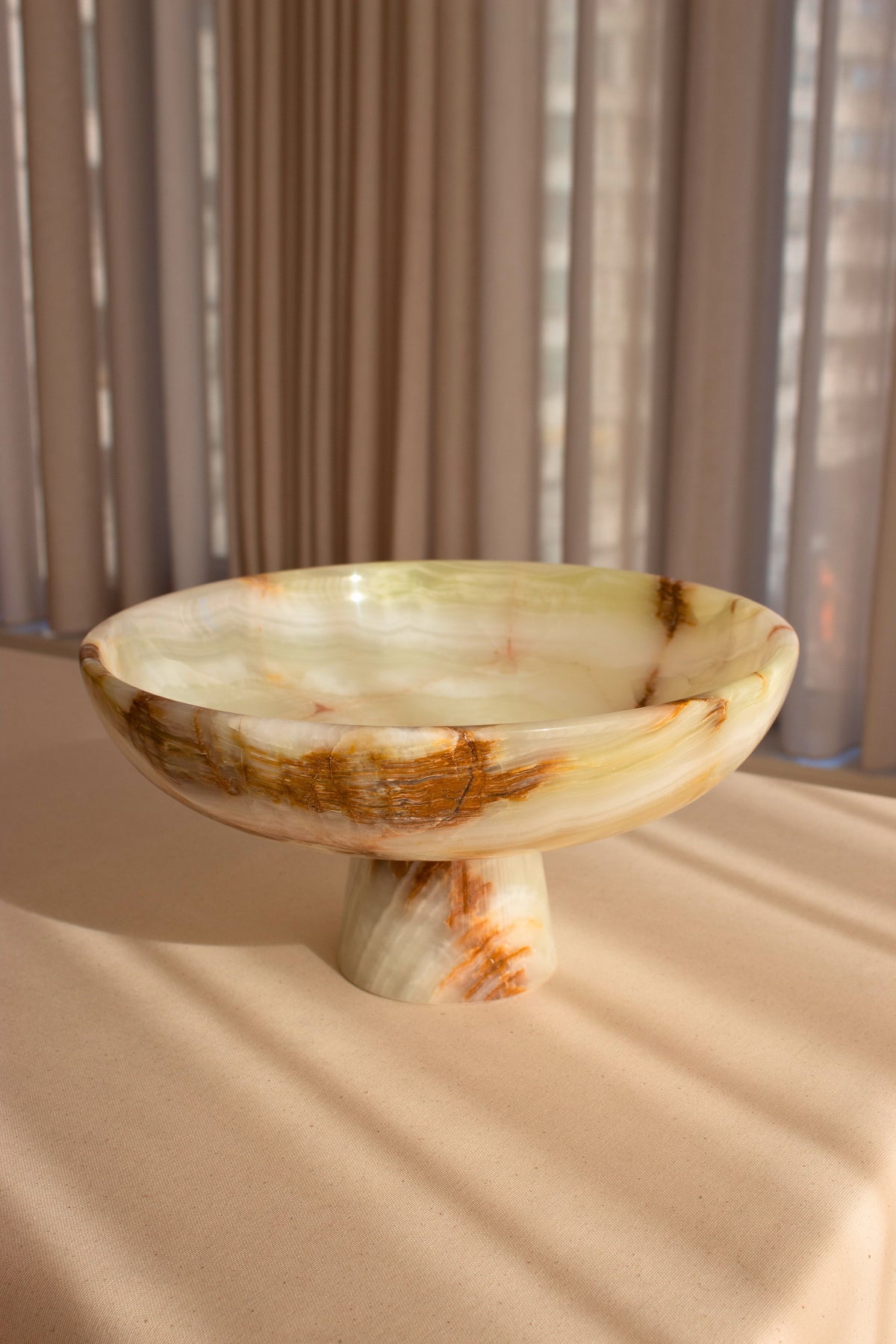
When an artisan finally cuts into a block of onyx, they're slicing straight through this timeline. What were once flat, horizontal layers inside the earth are revealed as sweeping waves, concentric circles and organic movement, a pattern no two cuts will ever share.

Ovio Bowl · Green Onyx
Long before it becomes a bowl, a vase, or a centerpiece on your table, onyx was rain, minerals and time, quietly building something no factory ever could.
In a world of mass production, we return to rarity.